
Dispatch · March 24, 2026 · 6 min · By Umberto Salazar
Phototherapy: light treatment for repigmenting skin
Controlled UV is a cornerstone of restoring lost pigment, especially in vitiligo.
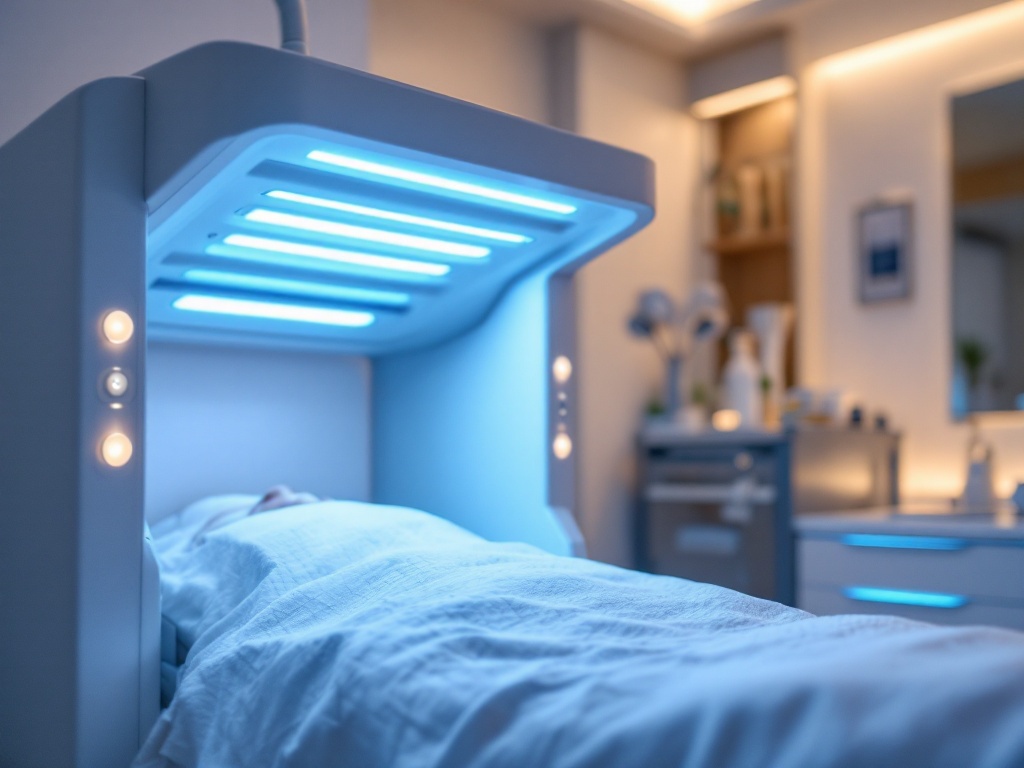
For several causes of pigment loss, particularly vitiligo, phototherapy, exposing the skin to carefully controlled ultraviolet light under medical supervision, is one of the most established and effective treatments for restoring color.
The most common form is narrowband UVB, delivered in brief, gradually increasing sessions several times a week in a clinic or with a prescribed home unit. The light stimulates surviving pigment cells, including those in the hair follicles, to multiply and repopulate the white patches over time. For more localized patches, targeted devices can treat just the affected areas, sparing the rest of the skin. Phototherapy is often combined with topical treatments for better results.
It requires commitment, repigmentation is gradual, typically taking months, and consistency is essential. Results depend on location, with the face and trunk responding better than the hands and feet, and on how long the patches have been present. Done under proper supervision to manage UV exposure safely, phototherapy has a strong track record. For patients with widespread or stubborn pigment loss, it is frequently the treatment that finally brings meaningful color back, and it remains a backbone of vitiligo care alongside the newer targeted therapies.
Related reading: Tinea versicolor: the fungal cause of light patches.
Further reading: The effects of UVB irradiance on vitiligo phototherapy and UVB-induced photocarcinogenesis (Photodermatol Photoimmunol Photomed 2020); Skin Cancer Risk (Nonmelanoma Skin Cancers/Melanoma) in Vitiligo Patients (Dermatol Clin 2017); Vitiligo nonsurgical treatment: a review of latest treatment researches (Dermatol Ther 2014).