
Dispatch · March 23, 2026 · 5 min · By Umberto Salazar
Post-inflammatory hypopigmentation: lighter spots after a skin problem
When eczema, a burn, or a procedure leaves pale marks.
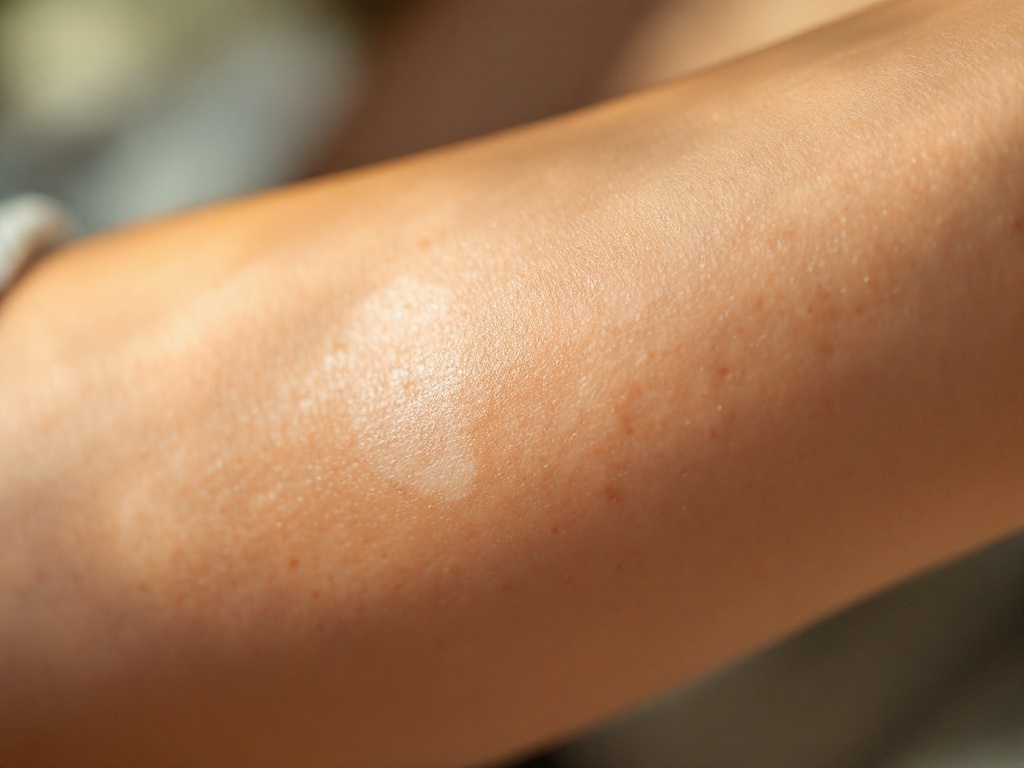
After a bout of skin inflammation or injury, eczema, a burn, an infection, acne, or even a cosmetic procedure, the affected area sometimes heals lighter than the surrounding skin. This is post-inflammatory hypopigmentation, the pale counterpart to the more familiar dark marks that inflammation can leave.
It happens because the inflammation temporarily disrupts the pigment-producing cells or the transfer of pigment to skin cells. Unlike vitiligo, the pigment cells are usually not destroyed but suppressed, which is why many cases recover on their own over weeks to months as the skin normalizes. It is more noticeable in deeper skin tones, where the contrast is greater, and can be distressing even though it is benign.
Treatment is largely supportive: control the underlying skin condition that caused it, protect the area from the sun (tanning the surrounding skin makes the pale spot stand out more), and give it time. Persistent cases may benefit from treatments that gently stimulate repigmentation. The key reassurance is that this is generally not permanent pigment loss but a temporary disruption that recovers, and that treating the root cause and avoiding sun contrast is the most reliable path back to even color.
Related reading: Understanding hypopigmentation: when skin loses color.
Further reading: Vitiligo, from Pathogenesis to Therapeutic Advances: State of the Art (Int J Mol Sci 2023); Repigmentation in vitiligo using janus kinase (JAK) inhibitors with phototherapy: systematic review and Meta-analysis (J Dermatolog Treat 2022); Advances in vitiligo: Update on therapeutic targets (Front Immunol 2022).