
Advances · July 7, 2026 · 7 min · By Wallace Furukawa
Surgical options for stable vitiligo: transplanting pigment back into skin
When patches have stopped spreading and creams have stalled, transferring pigment cells can restore color. Here is who it helps and how it works.
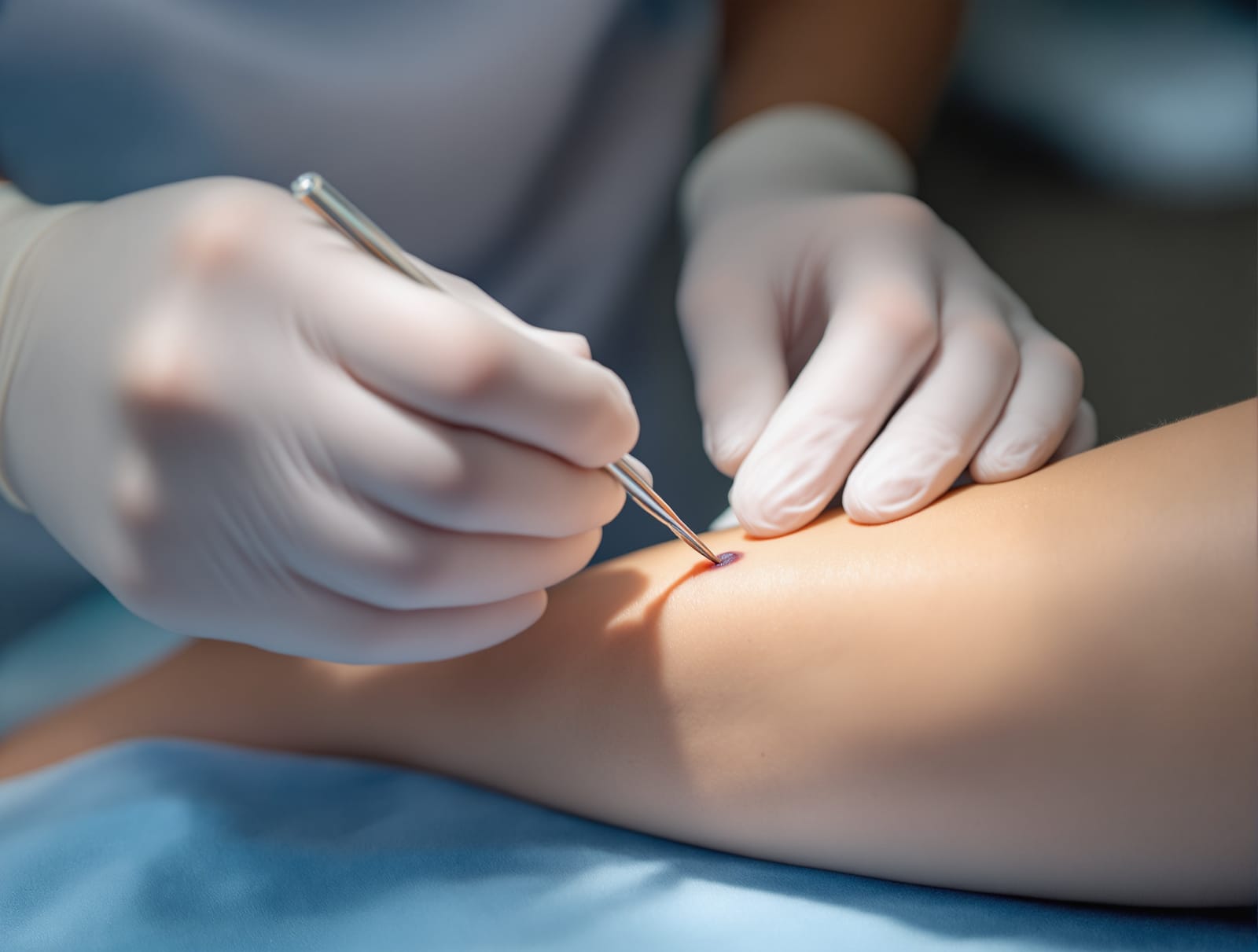
Most vitiligo treatment is medical: creams that calm the immune attack, phototherapy that coaxes surviving pigment cells to spread, and newer targeted therapies that block the specific immune signal driving the disease. But for a particular group of patients, there is another route that gets less attention: surgery that physically moves working pigment cells from healthy skin into a white patch. It is not a first step, and it is not for everyone, yet for the right candidate it can restore color where nothing else has.
Why stability is the whole game. Surgical pigment transfer is offered only for vitiligo that has stopped spreading, usually meaning no new patches and no growth of existing ones for roughly six to twelve months. The reason is mechanical and immune. Vitiligo can spread into areas of skin trauma, a phenomenon called the Koebner response, so operating on active disease risks triggering exactly what you are trying to fix. Stable segmental vitiligo, which settles early and stays put, is often the best-behaved candidate, along with stable, limited patches that have resisted creams and light.
The main techniques. Several approaches share the same goal of relocating melanocytes, the pigment-making cells, from a donor site to the depigmented patch. In miniature punch grafting, tiny plugs of pigmented skin are placed into the white area. In suction blister grafting, gentle suction lifts a thin blister of the outer skin layer from a hidden donor site, and that pigmented sheet is transferred onto the patch. The most refined option is cellular grafting, often called melanocyte-keratinocyte transplantation, in which a small piece of donor skin is processed in the clinic into a suspension of pigment cells that is then applied over a prepared patch, letting a small donor area cover a much larger recipient one. The National Institute of Arthritis and Musculoskeletal and Skin Diseases lists these surgical techniques among the established options for stable disease (NIAMS).
What results look like. Outcomes are best on stable, well-defined patches, and, as with nearly every vitiligo treatment, the face and torso respond better than the fingers, lips, and bony areas that resist repigmentation. When it works, transferred pigment can spread outward from the graft over the following months to fill in the surrounding skin, and the color match is often good. Cellular grafting in particular can treat larger areas from a small donor sample, which is why it has become a preferred method at centers that offer it.
Risks and honest limits. These are real procedures with trade-offs. The donor site needs to heal, color matching is not always perfect, and some grafting methods can leave a subtly uneven, cobblestone-like surface texture in the treated area. The biggest limitation is candidacy itself: surgery is unsuitable for anyone whose vitiligo is still active or widespread, and it is not a cure for the underlying autoimmune process, which is why patches can still recur if the disease later reactivates. Availability is another practical hurdle, since these techniques are performed mainly at specialized dermatology centers.
Where it fits in the plan. Surgery does not replace medical treatment; it follows it. A typical path is to first stabilize and treat the disease medically, reserve grafting for patches that stay stubbornly white, and then support the transplanted cells afterward with phototherapy to encourage the new pigment to spread and settle. For patients who would rather not pursue any procedure, cosmetic camouflage remains a low-risk way to even out appearance in the meantime.
The bottom line. Pigment-transfer surgery is a genuine option for a narrow, well-chosen group: people whose vitiligo has gone quiet and whose patches have not responded to creams or light. It is not a shortcut and not a cure, but in stable disease it can accomplish what medical therapy alone sometimes cannot. The first move is not the operating room; it is a conversation with a dermatologist about whether your vitiligo is stable enough to make surgery worth considering.
Related reading: Advances in vitiligo and repigmentation treatment.