
Advances · July 3, 2026 · 7 min · By Wallace Furukawa
Topical JAK inhibitors: how ruxolitinib changed vitiligo treatment
The first cream approved specifically to repigment vitiligo, what it does, and what to realistically expect.
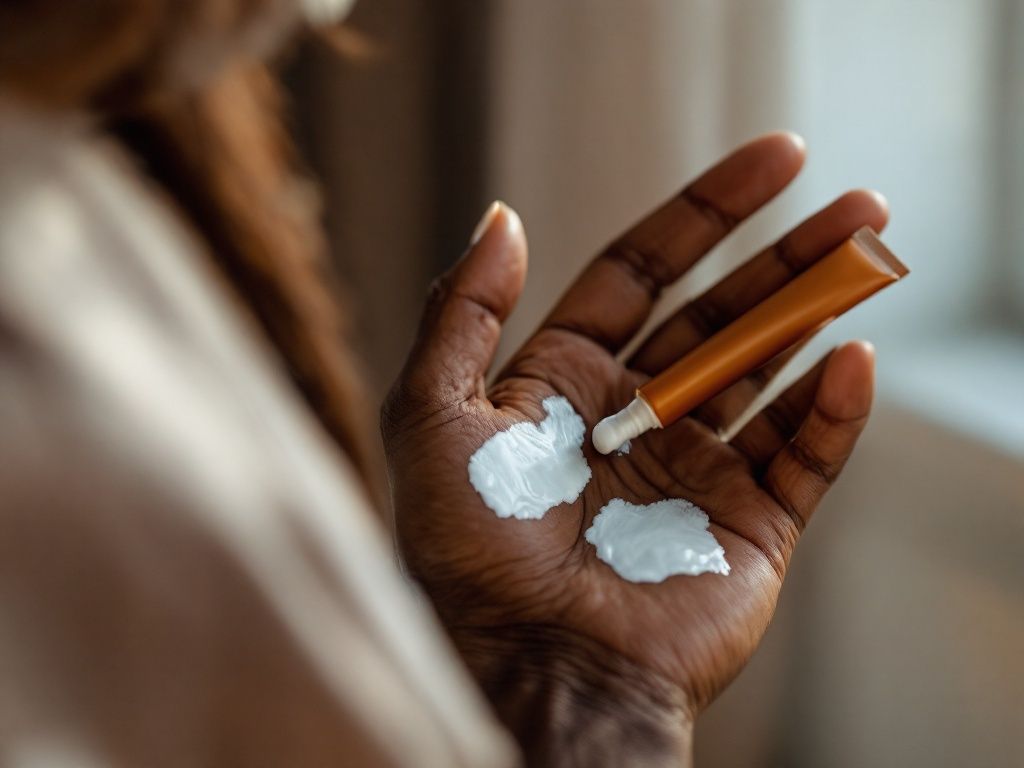
For decades, people with vitiligo were treated with medicines borrowed from other conditions: steroid creams designed for eczema, immune modulators developed for transplant medicine, light therapy adapted from psoriasis care. That changed in 2022, when the FDA approved topical ruxolitinib (sold as Opzelura) as the first treatment specifically indicated to repigment skin in non-segmental vitiligo (FDA). It remains the clearest example of what the newer targeted therapies look like in practice.
What a JAK inhibitor actually does. Vitiligo is driven by a specific immune signaling loop. Immune cells release interferon-gamma, which signals through a pathway called JAK-STAT inside skin cells, which in turn recruits more immune cells to attack melanocytes, the cells that make pigment. JAK inhibitors block that relay. Applied as a cream twice daily to the affected patches, ruxolitinib quiets the local immune attack, which gives surviving pigment cells, including the reservoir that lives in hair follicles, room to repopulate the white patches. It is not bleaching in reverse or a dye; it is an immune treatment that lets the skin's own machinery come back online.
What the trials showed. In two large phase 3 trials, roughly three in ten patients using ruxolitinib cream reached at least 75 percent repigmentation of facial vitiligo at six months, and results kept improving with continued use out to a year, when about half of treated patients reached that facial milestone. Placebo responses were far lower. The full trial data are published and worth a look for anyone weighing the decision (Rosmarin et al., NEJM, 2022). Two realities sit inside those numbers. First, the face responds best, as it does with nearly every vitiligo treatment; hands and feet remain stubborn. Second, this is slow medicine. Meaningful change is measured in months, and stopping treatment can allow patches to return, so it is best understood as ongoing management rather than a one-time fix.
Side effects and sensible cautions. The most common side effects in trials were mild: acne at the application site, itching, and redness. The label carries the boxed warning that applies to the JAK inhibitor class as a whole, based largely on data from oral JAK drugs in older rheumatoid arthritis patients; how much of that risk applies to a cream used on limited body surface area is an open question doctors weigh case by case. Practical limits matter too: it is approved for ages 12 and up, for non-segmental vitiligo, and for use on up to 10 percent of body surface area. Cost and insurance coverage are real obstacles for many patients, which is a conversation to have up front rather than at the pharmacy counter.
Where it fits in a treatment plan. Ruxolitinib does not retire the older tools; it joins them. Dermatologists frequently pair it with narrowband UVB phototherapy, since light and immune quieting work on different parts of the problem and combinations tend to outperform either alone. The American Academy of Dermatology's patient guidance now lists topical JAK inhibition alongside phototherapy, topical steroids, and calcineurin inhibitors as core options (AAD). For limited facial vitiligo, a JAK cream may be the first prescription. For widespread disease, phototherapy usually remains the backbone, with targeted topicals layered onto priority areas like the face and hands.
The honest bottom line. Topical JAK inhibition is a genuine advance, not a miracle. Many patients get repigmentation that older creams rarely delivered, some get dramatic results, and a meaningful minority see little change. Research on oral JAK inhibitors and next-generation topicals for vitiligo is active, so the menu is likely to keep growing (NIAMS). If your vitiligo is new or spreading, the window where treatment works best is early, which makes a prompt dermatology consult the most valuable step you can take.
Related reading: Advances in vitiligo and repigmentation treatment.