
Field Notes · June 20, 2026 · 5 min · By Ximena Calloway
Light patches after eczema and psoriasis: why they appear and when color returns
Inflammation can leave skin lighter for a while. Here is what helps it recover.
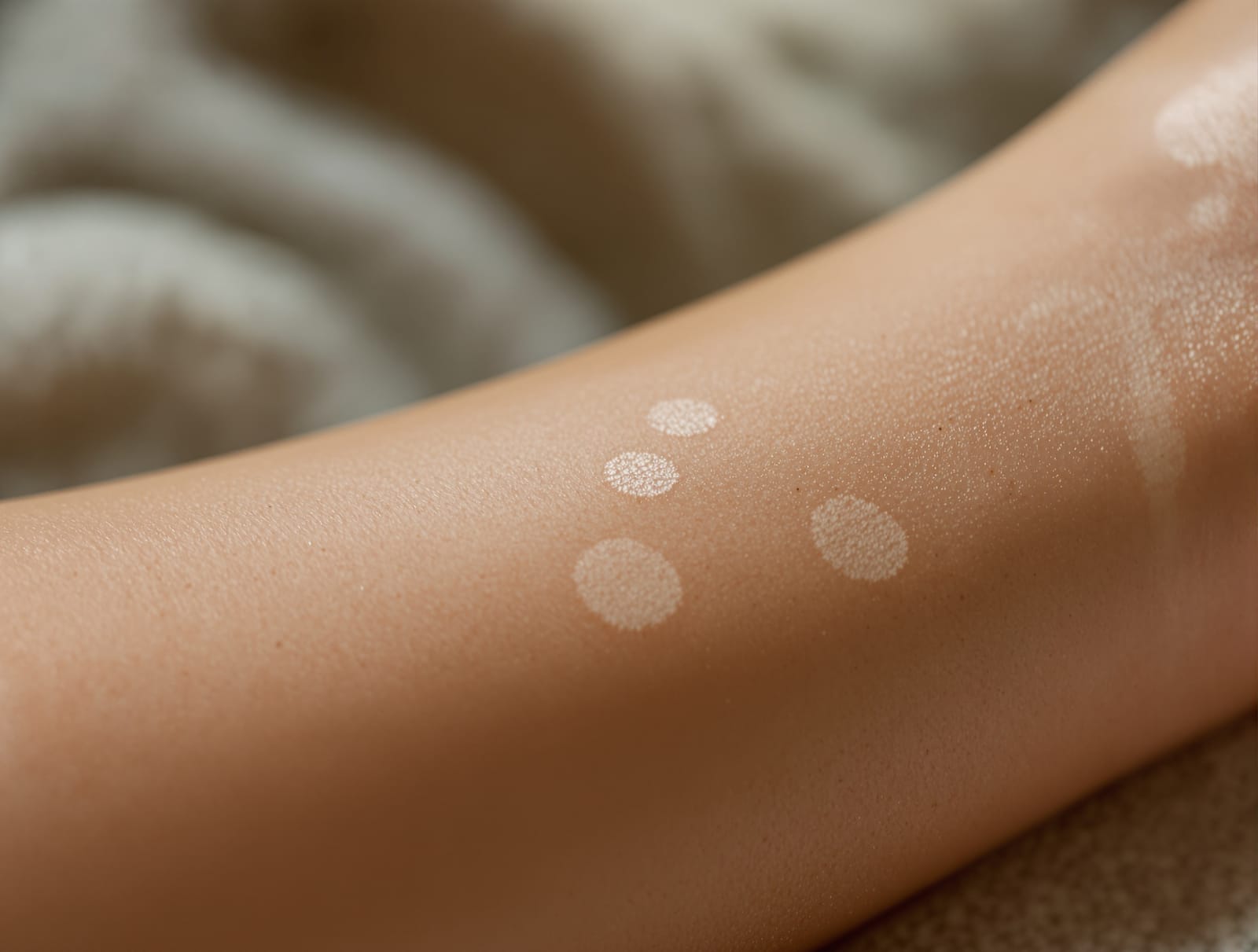
One of the most common reasons skin loses color in patches is not a pigment disease at all, but the aftermath of inflammation, and eczema and psoriasis are frequent triggers. When skin is inflamed, the pigment-producing cells can slow or pause, so once the rash settles it often leaves lighter marks where it used to be. This is post-inflammatory hypopigmentation, and it is especially noticeable on deeper skin tones where the contrast is greater.
The reassuring part is that this kind of color loss is usually temporary. Unlike vitiligo, where the pigment cells are destroyed, here they are mostly intact and simply subdued, so color tends to return gradually as the skin recovers, over weeks to many months. The pattern follows the old rash rather than spreading on its own, which is one clue that helps a dermatologist tell it apart from a primary pigment disorder.
The most useful step is to calm the underlying eczema or psoriasis so new flares stop adding fresh light spots, then protect the area with daily sun protection so the recovering skin can even out against the surrounding tone. Gentle skin care and patience do most of the work; scratching and repeated flares slow it down. If patches are sharply defined, growing, or not recovering after several months, it is worth a dermatologist's look to confirm the cause and rule out anything that needs specific treatment.
Related reading: Post-inflammatory hypopigmentation: color loss after the skin heals.