
Dispatch · July 5, 2026 · 6 min · By Umberto Salazar
When treatment lightens skin: hypopigmentation after lasers and steroids
Cosmetic and medical treatments can leave pale patches. Most recover; some can be avoided entirely.
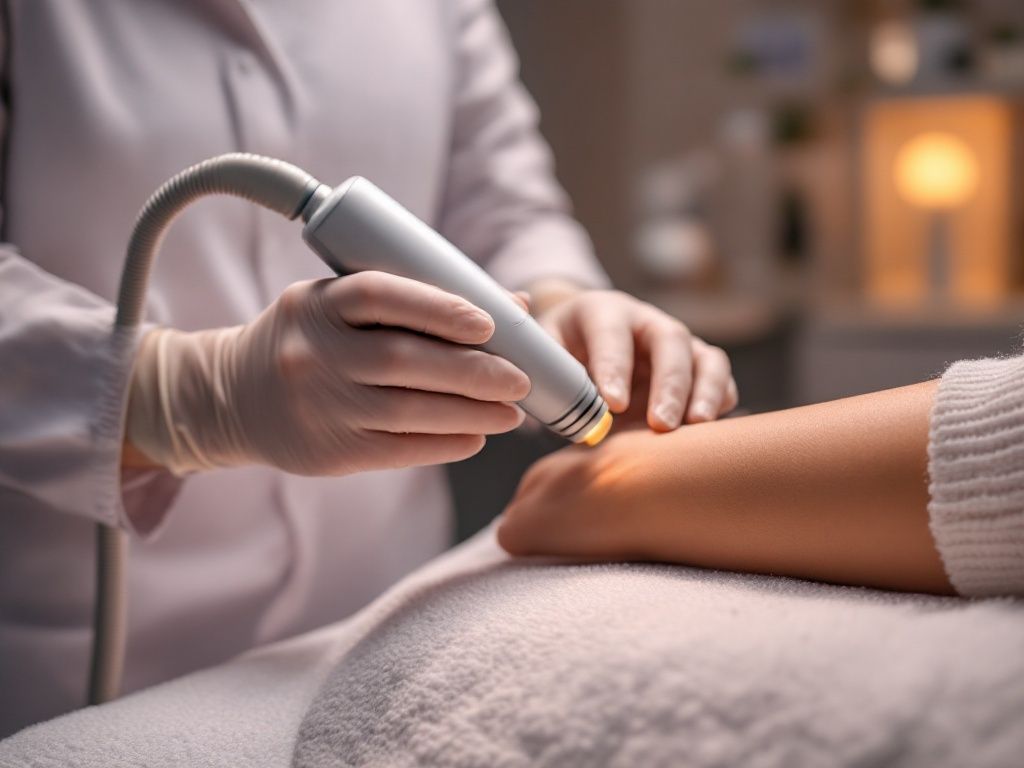
Most coverage of pigment loss focuses on conditions. But a meaningful share of the light patches dermatologists see were caused, ironically, by treatment itself: laser sessions, steroid creams used too aggressively, or steroid injections placed for another problem. Understanding how this happens makes it largely preventable, and knowing the usual course spares a lot of anxiety when it does occur.
How lasers can lighten skin. Lasers work by delivering concentrated energy to a target, a hair follicle, a tattoo pigment, a blood vessel, or the skin surface itself. Melanin, the skin's own pigment, absorbs much of that energy along the way. When settings are too aggressive for a person's skin tone, or when a device meant for lighter skin is used on a deeper tone, the collateral heat can stun or injure melanocytes, leaving pale spots or patches where the treatment landed. Deeper skin tones carry the higher risk, because more melanin means more absorbed energy at the surface (MedlinePlus). This is the strongest argument for choosing experienced providers who treat your skin tone routinely, ask about your tanning and medication history, and test a small patch first. Hair removal, resurfacing, and tattoo removal lasers are the usual culprits; intense pulsed light devices can do the same.
Steroids: creams and injections. Corticosteroids calm inflammation, but they also suppress melanocyte activity when used heavily. Potent steroid creams applied for too long, especially on thin skin like the face, groin, or a child's skin, can leave lightened areas along with thinning. Injected steroids, commonly placed into keloids, cysts, or joints, occasionally leave a pale patch at or around the injection site, sometimes tracking along the path of the injection. These spots can take a long time to recover, but most do, because the pigment cells are suppressed rather than destroyed, the same forgiving biology behind other forms of post-inflammatory hypopigmentation.
The usual course: recovery, slowly. For the majority of treatment-related light patches, time is the main therapy. Melanocytes resume pigment production over weeks to many months once the insult stops. While waiting, two habits genuinely help. First, protect the area from sun: pale patches burn easily, and tanning the surrounding skin only deepens the contrast, a principle covered in our piece on sun protection and pigment disorders. Second, stop the cause: pause further laser sessions on the affected area and review any ongoing steroid use with the prescriber rather than quitting a needed medicine on your own.
When it lingers. A minority of cases, particularly after aggressive laser injury, involve true melanocyte loss and behave more stubbornly. Persistent patches at the one-year mark are worth a dedicated visit. Options a dermatologist may consider include phototherapy or targeted excimer laser to stimulate repigmentation, and cosmetic camouflage in the meantime. It is also worth confirming the diagnosis, because a pale patch that appears after a procedure is occasionally something else that was simply unmasked, and treatments differ; the American Academy of Dermatology maintains plain-language guidance on the range of causes (AAD).
The checklist before your next procedure. Ask what device will be used and whether it is appropriate for your skin tone. Mention any history of pigment problems, recent tanning, or photosensitizing medications. Request a test spot for a first laser session. And if you notice lightening after any treatment, photograph it, date it, and show the provider early. Most treatment-related hypopigmentation recovers, but the version that never happens is better still. If a patch is spreading, sharply white, or simply worrying you, see a dermatologist rather than waiting it out alone.
Related reading: Post-inflammatory hypopigmentation: lighter spots after a skin problem.