
Field Notes · July 4, 2026 · 6 min · By Ximena Calloway
Pityriasis alba: the faint pale patches on young cheeks
A common, harmless cousin of eczema that parents often mistake for vitiligo.
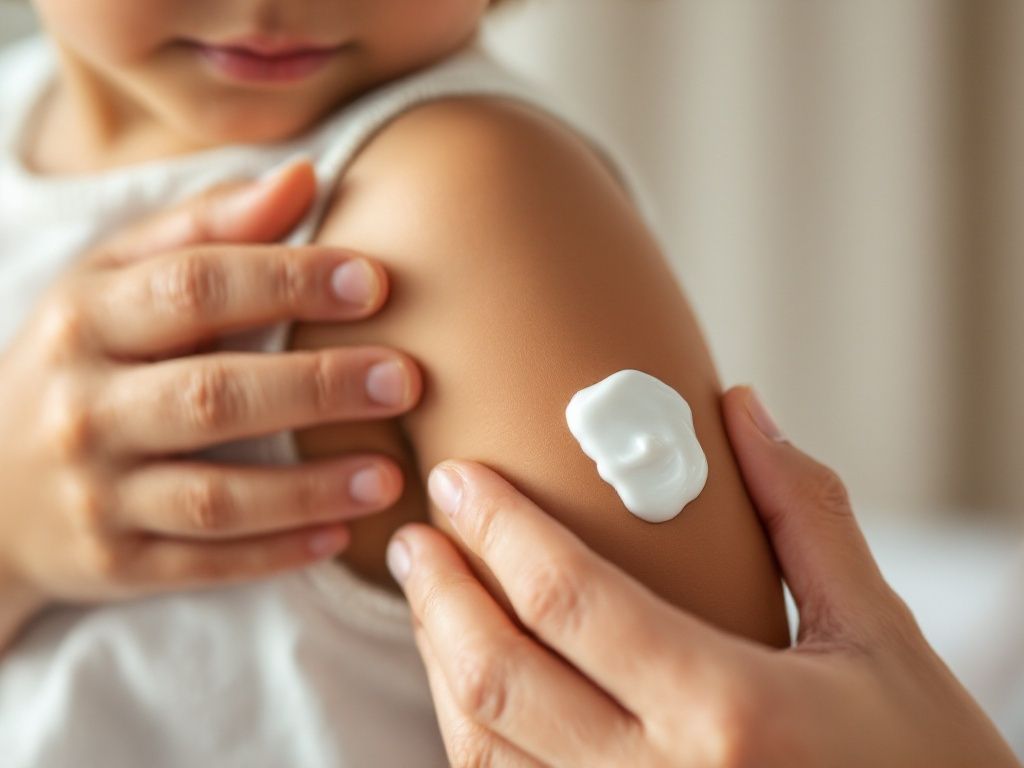
Few white patches cause more unnecessary worry than pityriasis alba. It shows up as faint, pale, slightly flaky patches, usually on the cheeks, upper arms, or shoulders of children and teenagers, and it is one of the most common reasons a parent searches for vitiligo in the middle of the night. The reassuring truth: pityriasis alba is harmless, extremely common, and self-resolving, and telling it apart from true pigment disease is usually straightforward.
What it is. Pityriasis alba is considered a low-grade, minor form of eczema. A patch of skin gets mildly inflamed, often too mildly to ever look like a rash, and the inflammation quietly dials down local pigment production. What remains is a pale patch, a subtle version of post-inflammatory hypopigmentation. It is most common in children between about 3 and 16, affects up to 5 percent of kids at some point, and appears more prominently in deeper skin tones simply because the contrast is greater (StatPearls, NCBI). Many affected children have the dry, sensitive skin that runs with eczema (AAD).
How it differs from vitiligo. The distinction matters, and a few features carry most of the weight. Pityriasis alba patches are hypopigmented, meaning lighter but not stark white; vitiligo patches are typically depigmented, chalk-white with crisp, well-drawn borders. Pityriasis alba has soft, blurry edges and often a fine, dry scale you can feel; vitiligo is smooth and sharply outlined. Pityriasis alba favors the cheeks and outer arms and tends to stay put; vitiligo often starts around the eyes, mouth, hands, or in areas of friction, and it spreads. Under a Wood's lamp in a dermatologist's office, vitiligo glows bright white while pityriasis alba barely changes, which is why the in-person exam settles most cases in minutes (Cleveland Clinic).
Why summer makes it look worse. Parents often report that the patches appeared in July. Usually they were there all along. The surrounding skin tans with sun exposure while the affected patches tan poorly, so the contrast jumps and the patches seem to bloom overnight. This is the same contrast mechanism that makes daily sun protection useful across nearly every pigment condition: sunscreen on the whole area keeps the background from darkening and the patches from standing out.
What actually helps. Treatment is gentle and unhurried, because the condition resolves on its own as pigment production recovers. The core routine is plain: a bland, fragrance-free moisturizer applied daily, a mild cleanser instead of harsh soap, and consistent sunscreen. If a patch is itchy, pink, or clearly scaly, a short course of a low-strength steroid or a non-steroidal eczema cream can settle the inflammation, which lets repigmentation start sooner. What does not help is scrubbing, bleaching creams, or antifungals bought on a guess. The timeline asks for patience: months is normal, and a year is not unusual for the color to fully even out.
When to have it checked. Any pale patch that is sharply defined, chalk-white, spreading, or simply not behaving like the pattern above deserves a look, as does a patch with persistent thick scale or one accompanied by other symptoms. Our guide to white patches in children walks through the broader list of causes. The overwhelming majority of the time, though, the answer to a faint pale cheek patch on an otherwise healthy child is the least dramatic one in dermatology: moisturize, protect from sun, and wait.
Related reading: White patches in children: common causes and when to see a doctor.